Pothole Repair 101: DIY Fixes vs. Hiring a Paving Contractor
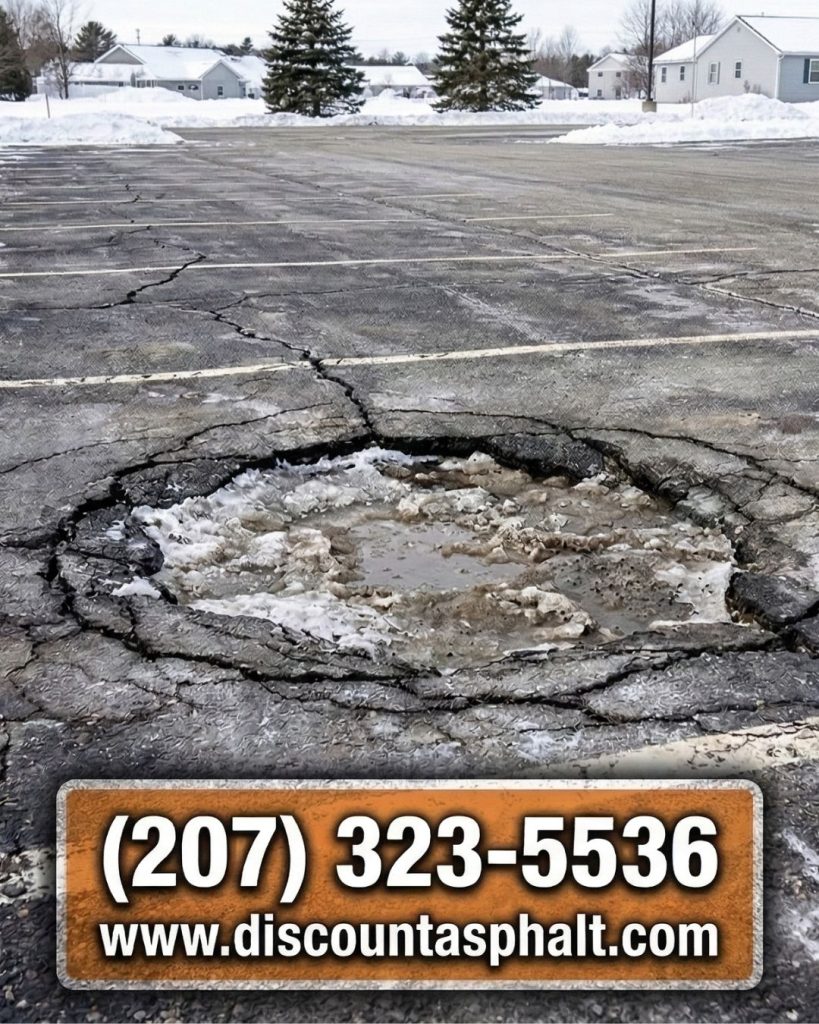
That pothole in your driveway isn’t decorative. You know it, your tires know it, and every overnight guest who hits it at 20 mph definitely knows it. The good news is that pothole repair driveway work doesn’t always require a crew and a paving machine. The bad news? Most DIY repairs in Maine fail faster than you’d think — sometimes before the snow even melts.
This guide gives you the full picture: how to do a legitimate cold patch repair yourself, why those repairs often fall apart in New England, and how to know when it’s time to call a professional asphalt patching contractor. No upsell, just straight talk from people who’ve been patching Maine driveways since 1969.
Why Potholes Form in the First Place — Especially in Maine
The Freeze-Thaw Cycle Is the Real Villain
Maine winters are hard on pavement. What most homeowners don’t realize is that the damage doesn’t happen all at once — it happens incrementally, one freeze-thaw cycle at a time:
- Water seeps into small cracks in your asphalt surface
- Temperatures drop below freezing and that water expands by roughly 9%
- The expansion forces the crack open wider
- It thaws, contracts, and water seeps deeper
- Repeat dozens of times over a single Maine winter
By the time mud season arrives in Belfast and Waldo County, what started as a hairline crack has become a hole you could lose a hubcap in.
Other Contributing Factors
- Poor base preparation when the driveway was originally installed
- Heavy vehicle loads that exceed the design load
- Age and oxidation — asphalt becomes brittle as it loses its binding oils
- Poor drainage that keeps the base saturated and soft
(Not sure if your driveway needs a patch or a full replacement? See our [link to: repair vs replacement] guide.)
DIY Pothole Repair: Step-by-Step Cold Patch Method
Cold patch asphalt repair is the most common DIY approach, and when done correctly it can hold — especially as a temporary fix. Here’s how to do it properly.
What You’ll Need
- Cold patch asphalt mix (available at most hardware stores in Maine)
- Hand tamper or heavy piece of lumber for compaction
- Work gloves, stiff brush or broom
- Optional: asphalt tack coat for better adhesion
Step-by-Step Instructions
Step 1: Clean out the pothole thoroughly. Remove all loose asphalt, gravel, dirt, and standing water. Use a stiff brush and, if possible, compressed air to clear debris from the edges. If the edges are jagged, cut them back to solid asphalt with a cold chisel.
Step 2: Check the depth. If the pothole is deeper than 4 inches, fill in 2-inch lifts, compacting between each layer. Trying to tamp a 6-inch hole in one shot results in a spongy patch that won’t last.
Step 3: Apply tack coat (recommended). A thin layer of liquid asphalt emulsion on the bottom and sides of the hole dramatically improves adhesion. A $10–$15 step most DIYers skip — and usually regret.
Step 4: Add the cold patch material. Overfill the hole slightly — about 1 inch above the surrounding surface. Cold patch compresses significantly when tamped.
Step 5: Compact aggressively. This is the step most homeowners underdo. Tamp the patch repeatedly until flush with the surrounding surface. Carefully driving over the patch several times achieves better compaction than a hand tamper.
Step 6: Let it cure. Cold patch remains somewhat soft for 24–72 hours. Keep vehicles off it during this period if possible.
Why DIY Pothole Repairs Often Fail in Maine: A Freeze-Thaw Reality Check
Cold patch is formulated to stay workable at low temperatures. That flexibility is great for installation — but it’s also why repairs tend to move, settle, and pop out when freeze-thaw cycles resume.
Cold patch uses emulsified asphalt that never fully cures the way hot-mix asphalt does. In coastal Maine, where freeze-thaw events can number in the dozens per winter:
- Water can still penetrate around the edges of the patch
- Freeze-thaw pressure will work at those edges just like it did on the original crack
- Traffic movement causes the patch to shift relative to surrounding pavement
A cold patch repair done in September might look fine through October — and be heaved out by January.
When Cold Patch Makes Sense
DIY cold patch is reasonable when:
- The pothole is small (under 12 inches in diameter, under 3 inches deep)
- You need a temporary fix until proper repair can be scheduled
- The surrounding asphalt is in generally good condition
It’s a Band-Aid, not a permanent pothole repair. A useful one, but a Band-Aid.
When to Call a Professional Paving Contractor
Some situations require professional work, full stop:
- Multiple potholes or interconnected cracks — suggests base failure beneath the surface
- The same pothole has been patched more than twice — something structural is wrong
- Edges of the pothole are crumbling or undermined — the void is larger than what you can see
- Standing water in or near the pothole — drainage problems require grading correction
- Large diameter (over 18 inches) or deep potholes — require hot-mix or infrared repair
- Alligatoring (web of cracks) — a sign of widespread base failure
A professional asphalt patching contractor uses hot-mix asphalt, infrared repair equipment, or saw-cutting and full-depth patching — methods that hold up to Maine winters in a way cold patch simply can’t.
What Does Professional Pothole Repair Cost in Maine?
| Repair Type | Approximate Cost | Best For |
|---|---|---|
| Single small pothole (cold patch + labor) | $75 – $200 | Potholes under 12 inches |
| Hot-mix patch repair | $150 – $400 per pothole | Most residential driveways |
| Infrared asphalt repair | $200 – $500 | Seamless, permanent repair |
| Saw-cut full-depth patch | $300 – $800+ | Deep base failure, large areas |
Consider: the average homeowner who patches the same pothole three times with DIY cold patch spends $60–$100 in materials — plus labor — for a result a $200 professional repair would have solved permanently.
How to Prevent Potholes from Coming Back
- Sealcoat every 2–4 years — fills minor surface cracks before they become entry points
- Address cracks immediately — small cracks cost almost nothing to fill; one Maine winter turns them into potholes
- Improve drainage around driveway edges — standing water is the enemy of asphalt longevity
- Avoid heavy loads on older asphalt — distribute load with gravel if needed
- Inspect after every winter — catching a crack in March beats dealing with a pothole by June
(For a full seasonal maintenance checklist, see our [link to: driveway maintenance guide].)
Get Your Driveway Patched Right the First Time
At Discount Asphalt and Paving, we’ve been repairing and paving driveways across coastal Maine since 1969. More than 55 years as a family-owned operation means we’ve seen every kind of asphalt failure Maine winters can produce — and we know the difference between a simple patch and a problem that needs a real solution.
We serve Belfast, Searsport, Camden, Northport, Lincolnville, and communities throughout Waldo and Knox counties.
Call us at 207-323-5536 or visit discountasphalt.com to schedule your free estimate.
Your driveway takes a beating every Maine winter. Let’s make sure the next one doesn’t make things worse.
